


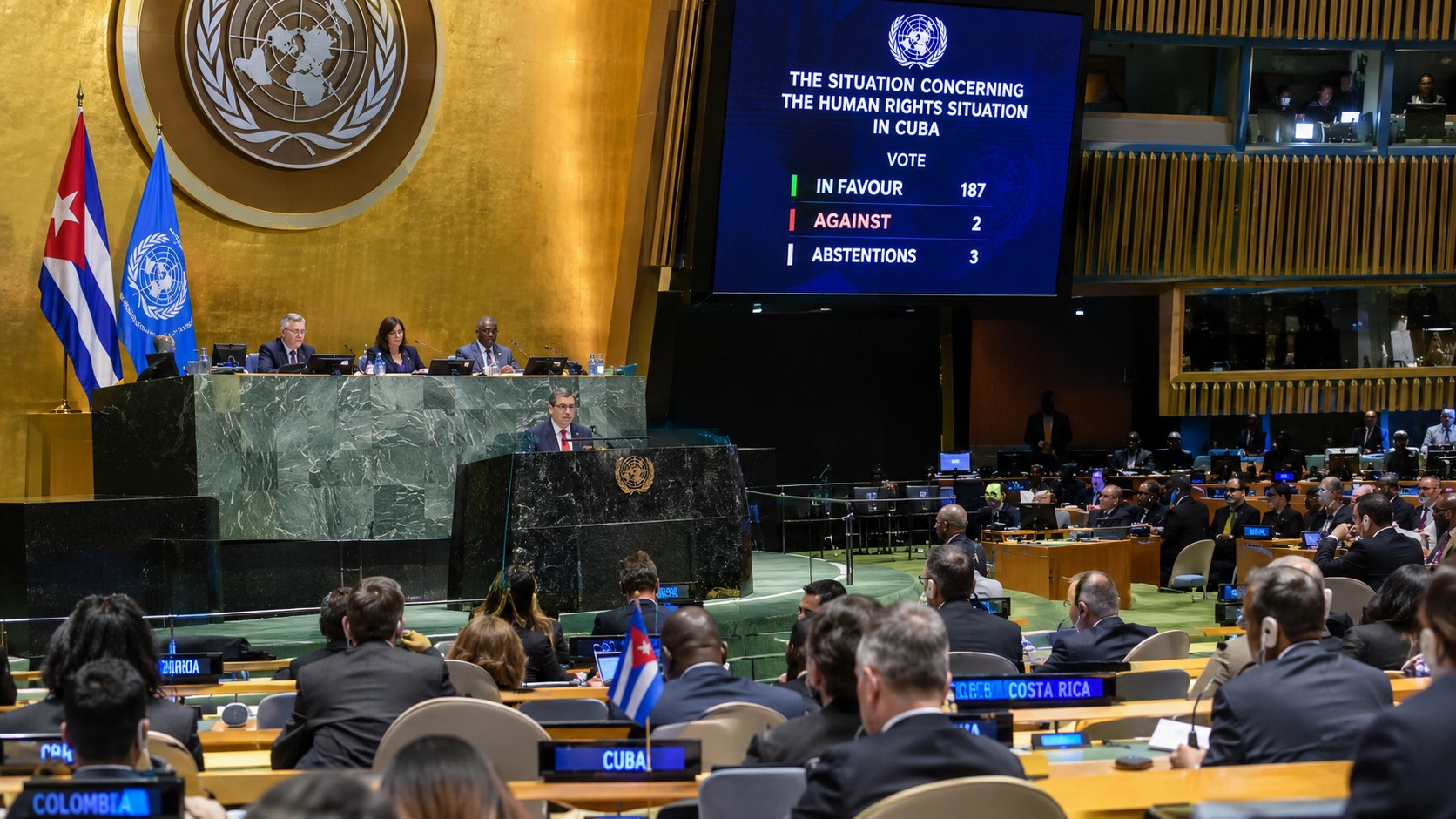
The United Nations General Assembly has again voted to condemn the decades-old US economic embargo on Cuba, but the latest result reveals a significant shift in international support for the resolution.
On October 28, 2026, the resolution received 130 votes in favour, 17 against and 25 abstentions. Although most countries supported Cuba’s position, the result was a substantial change from 2025, when the measure received 165 votes in favour, seven against and 12 abstentions.
The vote followed an intense diplomatic campaign by Washington to persuade countries to change their positions. Germany and Italy were among the countries that abstained after previously supporting the resolution. The United States and Israel voted against it, alongside 15 other countries.
The annual resolution calls for an end to the US economic, commercial and financial embargo. However, the General Assembly’s vote is not legally binding. Any decision to lift the embargo rests with the US Congress, meaning the latest result does not automatically change the restrictions affecting Cuba.
Cuban Foreign Minister Bruno Rodríguez Parrilla criticised Washington’s pressure campaign and maintained that the embargo continues to harm ordinary Cubans. US officials, meanwhile, welcomed the increase in abstentions and argued that the changing vote reflected growing support for their position.
The vote comes as Cuba continues to face severe economic and energy challenges, including fuel shortages, prolonged power outages and difficulties securing essential supplies. These pressures have made the dispute over US policy toward the island increasingly prominent in international diplomacy.
The latest vote keeps the embargo at the centre of global debate, but the decline in support for Cuba’s resolution signals a changing diplomatic landscape.



Comments (0)
Sign in to join the conversation.